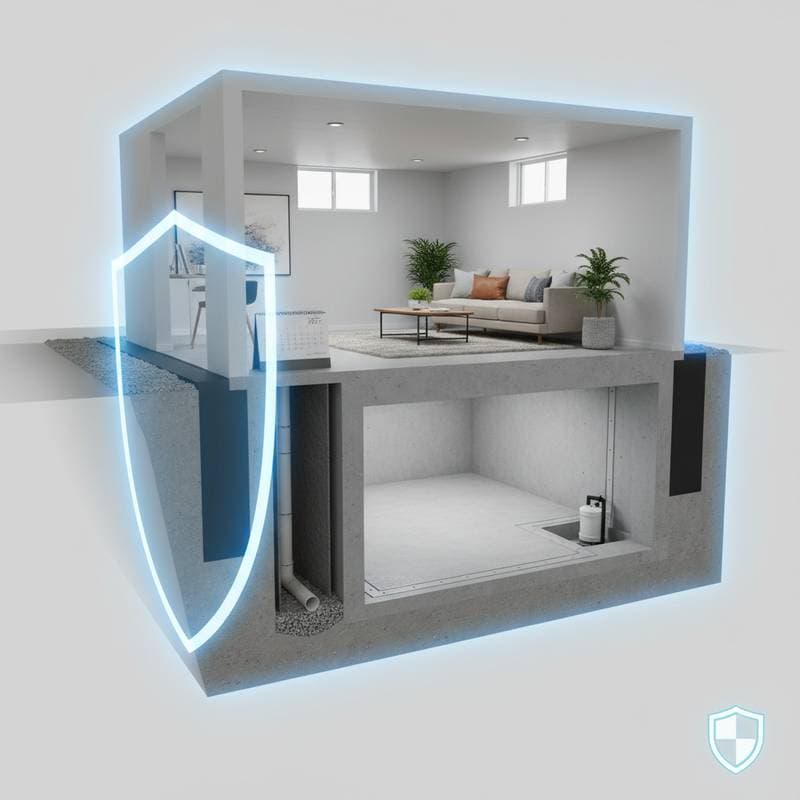
2025 Waterproofing Essentials to Shield Basements
A basement serves as a valuable extension of living space when kept dry and functional. Moisture intrusion, however, transforms it into a source of structural threats, including mold proliferation and foundation instability. Proactive waterproofing addresses these risks effectively, safeguarding both the home's integrity and its market value, regardless of regional flood risks or occasional heavy rains.
Project Snapshot
Average Cost: $3,500 to $10,000
Timeline: 3 to 10 days
Lifespan: 25 to 40 years
Best Season: Spring or early fall
DIY Friendly: Partial
Understanding the Types of Basement Waterproofing
Waterproofing methods target specific water entry points, with selection guided by foundation materials, surrounding soil, and the severity of infiltration, from subtle seepage to overt flooding.
Interior Waterproofing
Interior approaches redirect water that has already penetrated the basement via integrated drainage solutions. These options prove more affordable and quicker to implement compared to exterior interventions.
- Interior sealants and coatings: Applied at $1 to $3 per square foot, these handle minor cracks or surface dampness effectively.
- Interior drainage systems: Perimeter French drains or channels range from $2,000 to $6,000, while sump pump additions cost $1,200 to $3,000.
Such systems suit properties with moderate water issues or restricted outdoor access.
Exterior Waterproofing
Exterior techniques prevent water from contacting the foundation altogether, offering robust, enduring protection despite greater complexity and equipment needs.
- Excavation and membrane installation: Full-perimeter work, including excavation, surface preparation, sealing, and membrane application, totals $8,000 to $15,000.
- Exterior drainage tiles: Positioned at the foundation footing and linked to sump or storm systems, these installations span $5,000 to $12,000 based on property dimensions.
Professionals must oversee these projects due to the scale of digging and material handling involved.
Foundation Crack Repair and Sealing
Even sealed basements remain vulnerable through cracks that permit groundwater passage. Injections using epoxy or polyurethane materials address individual fissures at $400 to $1,000 each, scaled by length and location.
Basement walls exhibiting inward bowing or horizontal cracks exceeding one-quarter inch demand evaluation by a structural engineer prior to waterproofing efforts.
What Drives the Total Cost
Project expenses vary based on several key elements that shape scope and labor demands.
- Foundation type: Concrete block constructions retain more water, necessitating extra sealing layers.
- Accessibility: Confined property boundaries or overlying structures like decks extend excavation durations.
- Drainage slope: Properties on level or descending terrain require enhanced grading or drain networks.
- Existing damage: Remediation for mold or foundational fixes introduces additional labor and materials.
- Building codes: Permit requirements for sump pumps or digs add $150 to $500 in fees.
Money-Saving Strategies
Strategic decisions allow homeowners to manage waterproofing budgets while upholding system efficacy.
Time Your Project Right
Opt for dry periods like spring or early fall, when contractor schedules ease and rates may decrease by 10 to 15 percent.
Combine Services
Integrate waterproofing with concurrent tasks such as gutter replacement or yard regrading. Shared excavation efforts can trim expenses by up to $1,000.
Use Mid-Grade Materials
While high-end membranes carry extended guarantees, mid-tier selections deliver sufficient durability for typical residences. Request side-by-side material assessments during consultations.
Financing and Rebates
Explore utility-sponsored incentives for sump pumps or drainage enhancements. Many programs extend interest-free financing tailored to flood mitigation initiatives.
Preventative Maintenance for Long-Term Results
Proper upkeep extends waterproofing durability across decades. Implement these routines to sustain performance.
- Examine gutters and downspouts seasonally, ensuring extensions reach at least six feet from the foundation.
- Test sump pump functionality biannually by adding water to the basin and confirming activation and discharge.
- Track basement humidity, targeting levels under 60 percent through dehumidifier use.
- Address emerging cracks promptly to avert widening from temperature fluctuations.
- Adjust soil grading as necessary, achieving a minimum one-inch drop per foot over the initial six feet from the structure.
Failure to perform these tasks risks system degradation and renewed water entry.
Choosing the Right Waterproofing Contractor
Selecting a qualified professional ensures technical precision and project reliability. Prioritize credentials and transparency in the hiring process.
Ask these questions before hiring:
- How many years of experience do you have with local basement waterproofing?
- What warranty coverage do you provide, and for how long?
- Do you manage all required permits and inspections?
- Which drainage or membrane systems do you recommend and install?
Request documentation:
- Evidence of insurance and bonding
- References from comparable regional projects
- Itemized written estimates detailing all costs
Avoid red flags:
- Bids significantly under market averages
- Aggressive sales approaches
- Vague warranty specifications
Obtain bids from no fewer than three providers to gauge fair pricing and feasible schedules. Secure a formal contract specifying timelines, payments, and warranties, eschewing informal understandings.
Steps to Secure Your Basement Now
Investing in waterproofing fortifies home safety, enhances livability, and upholds property worth. Begin with a post-rain assessment for signs of moisture, such as wet areas or fissures, documenting findings visually.
Consult three licensed specialists for on-site assessments; their tailored proposals will clarify optimal approaches within your financial parameters.
For initial measures, consider applying interior sealants alongside a dehumidifier to regulate moisture. Observe outcomes over several months; persistent issues signal the need for comprehensive drainage or exterior solutions.
Locate area experts in basement waterproofing and mandate written warranties to commence work confidently.