Biophilic Living Walls Reduce HVAC Costs by Up to 30 Percent
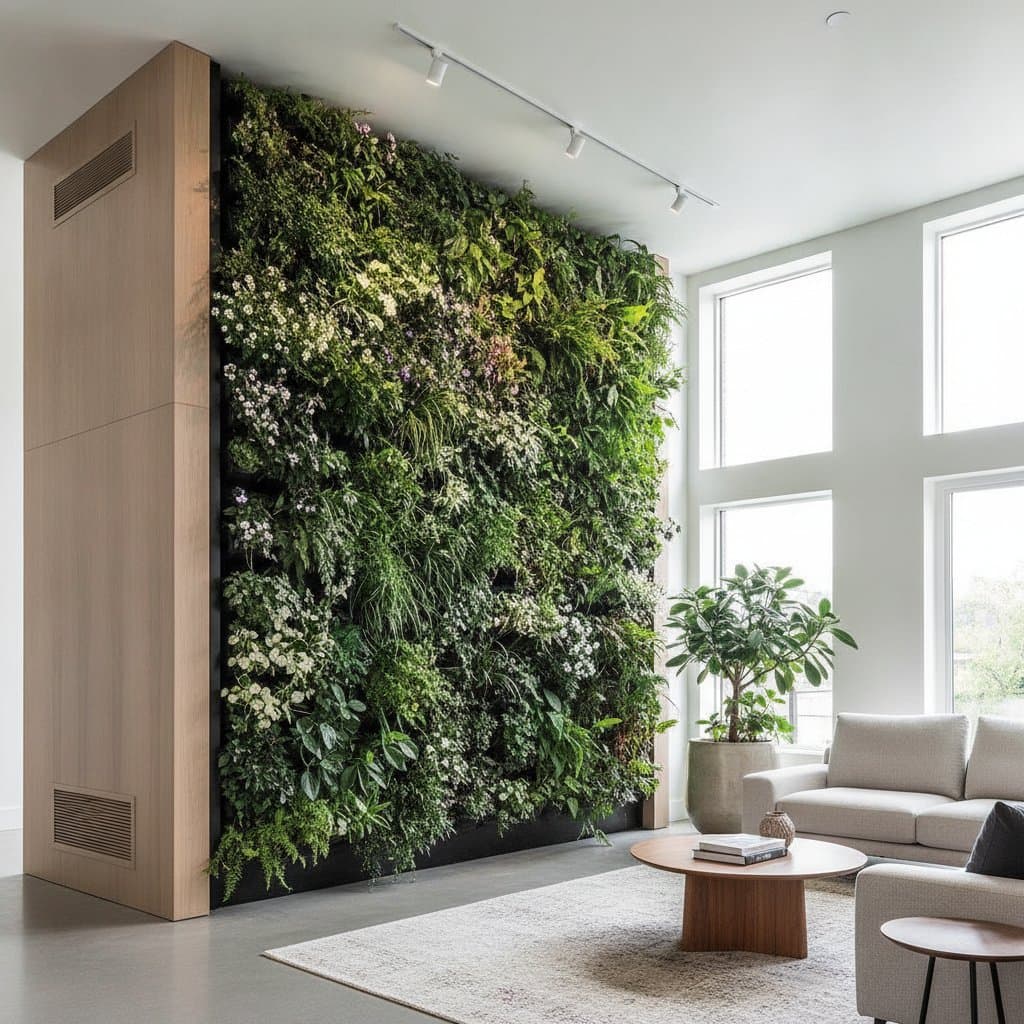
Choosing a high-efficiency HVAC system addresses only part of home energy use. Building envelope details, material choices, and indoor vegetation also shape total consumption. Biophilic living walls stand out as an effective yet often overlooked option for cutting mechanical heating and cooling demands. These vertical gardens work as living thermal regulators that improve comfort and air quality while lowering HVAC energy use by as much as 30 percent.
How Living Walls Regulate Temperature
A living wall creates a biological insulation layer. Plants, soil, and air gaps between the wall and building surface combine to form a thermal barrier. In warm weather, plant transpiration cools nearby air and drops surface temperatures by several degrees. In cold conditions, the layered structure holds heat and reduces heat loss through exterior walls.
The wall interacts with the HVAC system as an adaptive component. Lower surface temperatures decrease radiant heat gain, so the air conditioning unit runs less often. This process cuts energy use while maintaining steady indoor conditions.
Energy and Cost Comparison
| System Type | Average Cooling Load Reduction | Estimated HVAC Energy Savings | Maintenance Cost | Environmental Benefit |
|---|---|---|---|---|
| Living Wall, Hydroponic | 25% | Up to 30% | Moderate | High carbon sequestration |
| Traditional Insulated Wall | 10% | Up to 12% | Low | Limited ecological value |
| Shaded Facade with Awnings | 15% | Up to 18% | Low | Minimal biodiversity benefit |
| Green Roof Only | 20% | Up to 22% | Moderate | Stormwater retention benefit |
Hydroponic living walls require higher initial investment yet return the largest energy reductions and environmental gains. Over 15 years, energy savings often recover installation expenses, especially in climates that need frequent cooling.
Key Installation Steps
Installing a living wall requires attention to several technical elements.
- Confirm that framing or metal grids can support the full weight of plants, substrate, and water.
- Install automated drip irrigation and drainage lines to keep moisture levels steady and protect building surfaces.
- Add waterproof membranes and vapor barriers to prevent moisture damage inside wall assemblies.
- Connect circulation pumps and grow lights to separate electrical circuits.
- Verify that local codes treat the wall as exterior cladding and meet fire and wind load standards.
Professional installation prevents mounting or irrigation errors that could cancel out energy advantages.
Ongoing Care and Performance
A properly maintained living wall continues to deliver results for many years. Regular tasks include pruning, irrigation checks, nutrient adjustments, and mounting inspections. Seasonal reviews confirm that drainage stays clear and plant coverage remains even. Automated sensors for moisture and nutrients lower the frequency of service while supporting plant health.
As root systems develop, they increase the wall thermal mass. This change improves insulation over time and produces gradual yearly gains in energy efficiency.
Economic Returns and Incentives
Upfront costs for a living wall can reach two to three times the price of standard siding. Operational savings and environmental gains offset this difference. Payback periods typically fall between seven and ten years based on local energy prices and system scale.
Reduced wear on mechanical equipment, lower utility bills, and higher property value strengthen the case for installation. Some areas provide rebates or tax incentives for green infrastructure that further shorten recovery time.
Planning a Living Wall for Your Home
Adding a living wall functions as both a design feature and a performance upgrade. Homeowners begin with a professional energy assessment that measures current HVAC loads and highlights locations where vegetation will produce the largest effect. Treating the wall as a combined architectural and mechanical element yields clear efficiency improvements along with better comfort and air quality.