What $15,000 Delivers in a 2025 Bathroom Remodel
I have remodeled three bathrooms in my own homes, and one consistent lesson emerges: the initial budget seldom aligns with final expenditures. Material costs vary, labor rates increase, and unexpected issues often appear behind walls. However, a $15,000 allocation can produce a reliable, appealing, and functional bathroom renovation through meticulous planning and grounded expectations.
Many homeowners anticipate that $15,000 funds a lavish spa-like escape. In reality, this amount positions the project in the mid-range category of remodels. Quality materials, reliable fixtures, and updated designs become feasible, provided each expenditure serves multiple purposes. The following sections detail coverage in the 2025 market and strategies to extend the budget effectively.
Understanding What $15,000 Covers
This budget occupies an optimal position between superficial updates and comprehensive overhauls. Homeowners can refresh surfaces, install new fixtures, and adjust minor layouts with prudent financial management. The outline below reflects observations from personal projects and professional consultations.
Cost Breakdown
- Demolition and disposal: $800 to $1,500, covering removal of old tiles, fixtures, and debris haul-away.
- Plumbing and electrical updates: $2,000 to $3,000, including pipe rerouting for new placements and wiring for outlets or fans.
- Tile, flooring, and wall finishes: $2,500 to $4,000, encompassing ceramic or porcelain options with professional installation.
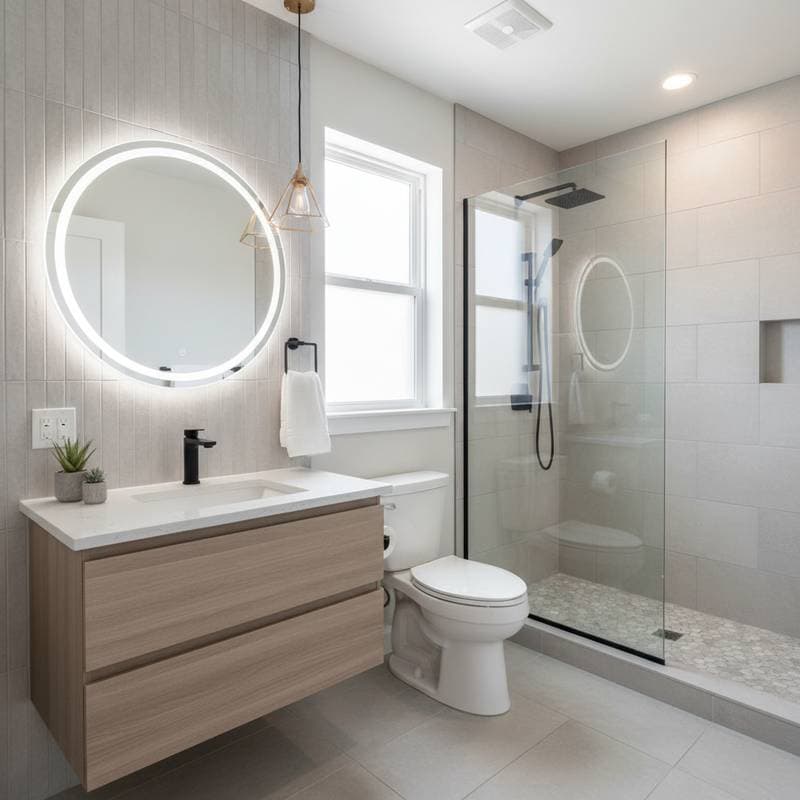
- Vanity, sink, and countertop: $1,500 to $3,000, featuring quartz or laminate surfaces paired with double-handle faucets.
- Toilet, tub, or shower unit: $2,000 to $3,500, such as low-flow toilets or alcove showers with glass enclosures.
- Lighting, mirrors, and accessories: $800 to $1,200, incorporating recessed LEDs and framed mirrors.
- Labor and permits: $3,000 to $4,000, accounting for skilled tradespeople and required inspections.
These elements sum to approximately $15,000, emphasizing the importance of deliberate selections. Relocating major plumbing or selecting premium imports like natural stone exceeds $20,000 quickly. Conversely, retaining the current footprint and opting for standard-grade supplies often yields savings.
Market Factors Influencing Costs
In 2025, tiles and plumbing components experience the steepest increases, driven by elevated shipping expenses and production bottlenecks. Contractors schedule projects months ahead, particularly in metropolitan and waterfront areas. High-demand zones allocate nearly 50 percent of budgets to workforce charges.
Residents in less competitive regions may reduce labor by 10 to 15 percent, though supply prices remain uniform. To manage outlays, procure fixtures in advance and secure them in protected storage until installation begins. Delaying tile purchases until project midpoint frequently results in limited options or expedited delivery surcharges.
Timing Strategies for Remodeling
Schedule renovations for spring or fall seasons, when contractor availability peaks and supply chains operate efficiently, unlike busy summer periods. Steer clear of holiday timings, as workforce premiums inflate expenses.
For material reductions, target clearance events or supplier outlets. Bulk purchases of prior-year inventory often deduct $500 to $1,000 from totals. Verify compatibility with your design before committing.
Return on Investment and Durability
Bathroom upgrades rank highly among home enhancements for financial recovery. Mid-range projects recoup 55 to 65 percent of costs upon sale. Remaining benefits manifest in enhanced usability and utility savings.
Energy-conserving elements, such as low-flow aerators and LED fixtures, decrease water and electricity usage by 10 to 20 percent yearly. For long-term residency exceeding ten years, prioritize resilience. Select porcelain tiles, robust hardware, and vapor-barrier paints that endure two decades with routine care. Emphasize expert application and sealing to prevent premature wear.
Essential Safety and Compliance Measures
Projects involving water or power systems require adherence to municipal regulations. Even fixture swaps demand permits if circuits change. Consult local authorities prior to commencement to avoid fines or rework.
Effective moisture barriers prove indispensable. Faulty liners, exposed grout, or absent seals invite fungal growth and structural decay. Detect odors or discoloration post-completion and notify professionals promptly. Remediation expenses surpass preventive investments substantially.
Executing the Project Effectively
Transform your space with a $15,000 remodel through targeted preparation. Prioritize essentials over enhancements by creating a prioritized list. Obtain three itemized proposals from certified contractors, evaluating not just costs but guarantees, supply inclusions, and schedules.
Acquire components ahead, verify shipments, and maintain them in climate-controlled areas. Maintain regular contractor updates and record modifications formally. Align timelines with favorable conditions to minimize interruptions.
Extend funds by managing non-specialized tasks like priming walls, debris removal, or hardware mounting personally. Prioritize precautions and defer complex elements to experts. Ultimately, this investment yields a refreshed, streamlined environment aligned with lifestyle demands, rewarding foresight with tangible results.