Zero-Threshold Showers Remove Tripping Hazards for Aging
Zero-threshold showers create a seamless transition between the bathroom floor and the shower area. This design removes the raised lip that often causes trips and falls. Homeowners who plan to age in place find this feature especially valuable because it supports independent living without major lifestyle changes.
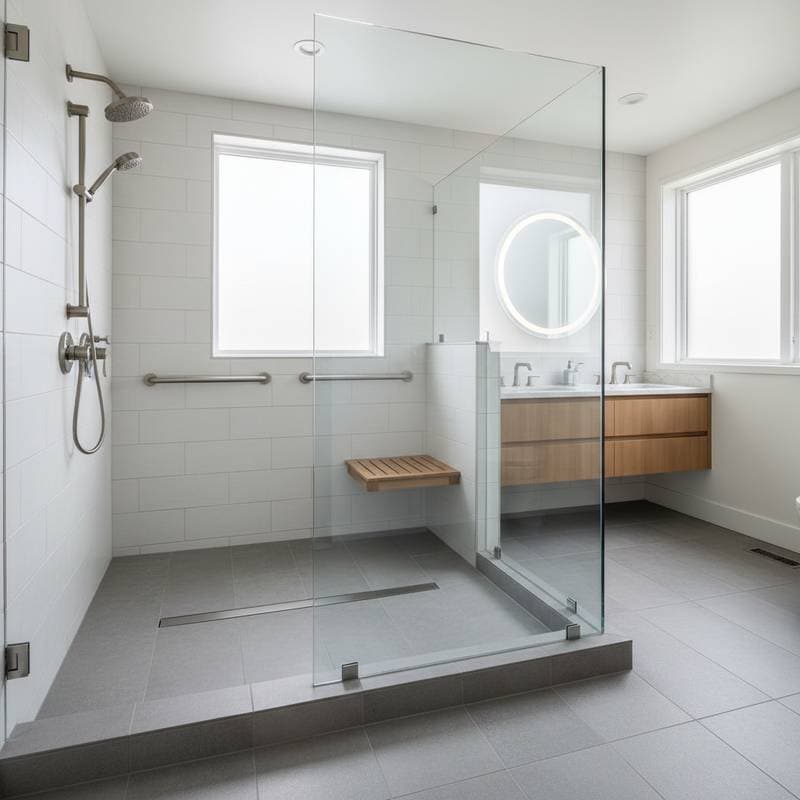
The concept centers on accessibility. A properly installed zero-threshold shower sits level with the surrounding floor. Water containment relies on a gentle slope and a linear drain rather than a curb. This approach maintains safety while preserving a clean, modern appearance.
Safety Advantages for Daily Use
Falls remain a leading cause of injury among older adults. Removing the threshold eliminates one common obstacle in the bathroom, where wet surfaces already increase risk. Users can enter and exit the shower with a walker, wheelchair, or without any mobility aid.
Beyond fall prevention, the open layout simplifies cleaning routines. Caregivers can assist more easily when no step separates the shower from the rest of the bathroom. The design also accommodates future needs if mobility declines over time.
Cost Factors and Budget Planning
Project costs typically range from 8000 to 18000 dollars. Several variables influence the final price. Bathroom size, drain type, and waterproofing method all affect expenses. Tile selection and custom seating add further cost.
Homeowners should separate professional tasks from those they can handle themselves. Demolition, plumbing relocation, and waterproof membrane installation require licensed contractors. Painting, fixture selection, and final cleanup remain suitable for capable do-it-yourselfers.
Design Elements That Improve Function
Effective layouts incorporate several practical features. A linear drain positioned along the back wall keeps water moving away from the entry. Handheld showerheads mounted on adjustable bars allow seated or standing use. Built-in niches at seated height store toiletries without bending.
Lighting deserves equal attention. Recessed ceiling fixtures combined with wall sconces reduce shadows that can obscure wet spots. Non-slip tile surfaces rated for wet areas provide additional traction. These choices combine safety with everyday comfort.
Installation Sequence and Timeline
Professional installation follows a clear order. First, the existing shower base is removed and the subfloor is leveled. Next, the drain assembly and waterproofing system are installed. Tile work and fixture placement complete the visible stages.
Most projects finish within two to three weeks when plumbing changes remain minimal. Larger renovations that involve moving supply lines may extend the timeline. Homeowners should schedule around periods when an alternate bathroom remains available.
Long-Term Value and Resale Impact
Zero-threshold showers appeal to a broad range of buyers. Families with young children appreciate easier access for bathing. Individuals recovering from surgery value the barrier-free entry. Real estate professionals note that updated bathrooms with accessibility features often support stronger sale prices.
Regular maintenance keeps the shower performing well. Grout sealing every twelve to eighteen months prevents moisture issues. Prompt repair of any caulk gaps around fixtures protects the waterproofing layer beneath the tile.
Planning Your Next Steps
Assess current bathroom dimensions and existing plumbing locations before selecting products. Consult a contractor experienced with accessible design to review options that fit both budget and long-term goals. A well-executed zero-threshold shower delivers daily safety benefits while supporting future independence.