2026 FEMA Flood Vent Rules Homeowners Need to Know
Your contractor mentioned that the crawl space vent system might not meet new FEMA flood vent standards. You believed the home was safe, yet insurance issues and inspection delays now appear possible. When my coastal home required an elevation certificate update, the existing vents proved noncompliant. Replacement proved costly, yet it prevented flood insurance rates from rising sharply.
The updated requirements change how homeowners in flood zones prepare for water events. The following sections explain the changes, outline compliance steps, and detail expected expenses.
Reasons for Revised Flood Vent Standards
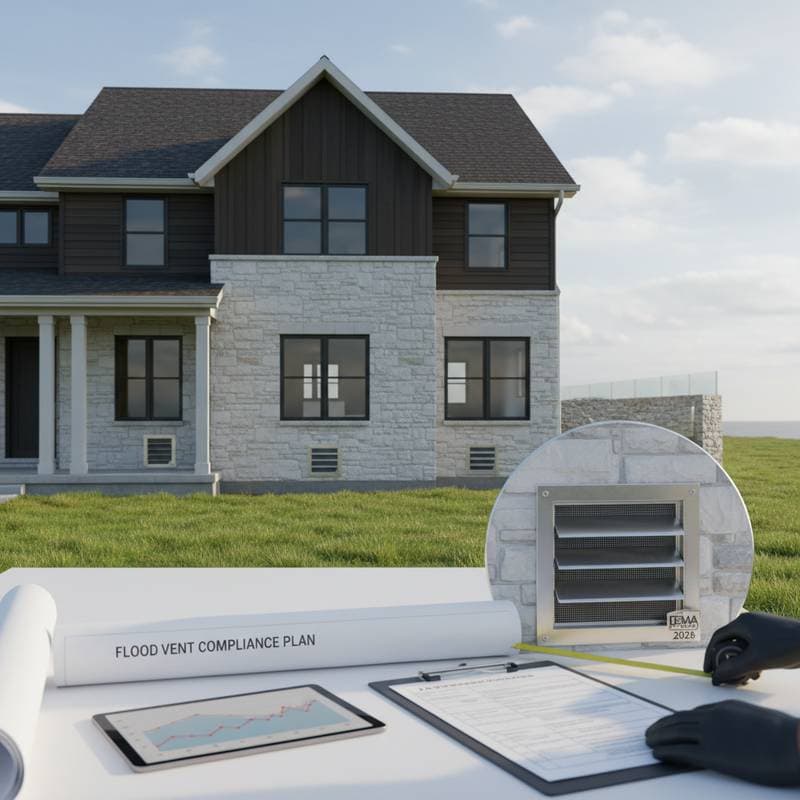
Flood vents allow water to enter and exit enclosed spaces such as crawl spaces. Equal pressure on foundation walls reduces the chance of structural collapse. Older vents frequently lacked independent testing or automatic operation and supplied insufficient net open area.
New standards demand certified flow capacity and visible labeling on every vent used in flood-prone buildings. The goal is fewer foundation failure claims and assurance that insurance discounts apply only to verified installations.
Noncompliant vents can eliminate an insurance discount. During a sale, inspectors will note outdated units, which may delay closing or lower the appraised value.
Required Features for Compliance
Inspectors now check for five specific elements.
- Automatic open and close mechanism that activates with rising water.
- Certified airflow rating stated in square inches per cubic foot of enclosed space.
- Permanent engraved certification mark visible from outside the structure.
- Installation below base flood elevation yet above grade to limit debris entry.
- Openings distributed on at least two sides of every enclosed area.
Missing any element can remove the compliance rating and increase annual premiums by several hundred dollars.
Installation Choices
Cutting through foundation block requires masonry tools and knowledge of structural loads. Replacement in an existing opening on a non-load-bearing wall can be completed by a prepared homeowner over a weekend at roughly three hundred dollars in materials.
New openings or suspected moisture issues call for a licensed contractor. The contractor calculates required vent area from the square footage of enclosed space and verifies that local codes are met. Errors at this stage can lead to failed inspections and added costs.
Financial Returns and Protection
FEMA-compliant vents typically reduce flood insurance premiums by ten to twenty percent. A homeowner paying two thousand dollars annually may save two hundred to four hundred dollars each year. The investment recovers its cost within roughly ten years.
Proper vents also limit hydrostatic pressure on the foundation and reduce moisture accumulation. In one case the upgrade lowered crawl space humidity and improved indoor comfort.
Ongoing Care and Documentation
Inspect vents twice yearly for debris, nests, or corrosion. After any flood, rinse units with a hose and confirm that moving parts operate freely. Replace damaged components promptly.
Retain certification documents for future property transfers. The paperwork confirms compliance and supports a smoother appraisal process.
Scheduling an Upgrade
Measure enclosed square footage and compare current vents against the five required features listed above. Obtain quotes from licensed contractors familiar with local permitting. Complete the work before the next insurance renewal or listing to secure lower premiums and avoid delays.