Walk-In Tub or Curbless Shower: Finding the Best Option for Accessibility
Homeowners planning an accessible bathroom remodel often weigh the merits of a walk-in tub against those of a curbless shower. Each option addresses safety and independence in distinct ways. The decision hinges on daily routines, physical requirements, and available space.
Comfort Priorities Versus Mobility Needs
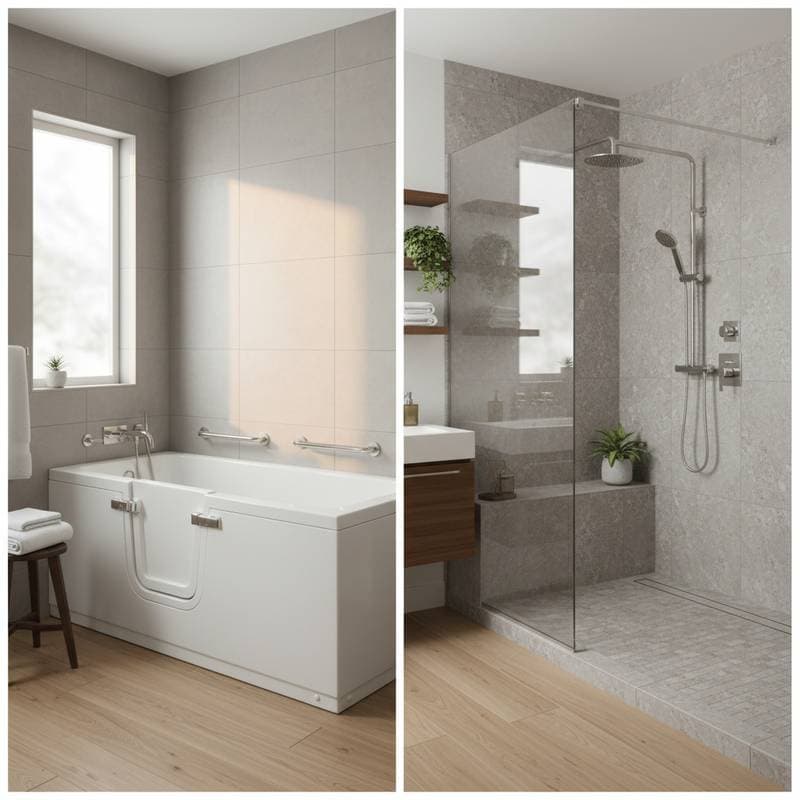
A walk-in tub supplies a deep soak along with a low entry door and built-in seating. This design suits individuals who seek hydrotherapy for joint relief or who enjoy extended bathing sessions. A curbless shower eliminates thresholds entirely and creates an open floor plan. It serves users who rely on wheelchairs, walkers, or who prefer rapid, standing showers.
Daily usage patterns determine the stronger choice. Households that value therapeutic soaking lean toward the tub. Those that emphasize quick cleaning and barrier-free movement select the shower.
Preparation Steps and Professional Requirements
Homeowners comfortable with basic demolition can remove old fixtures and handle surface prep. These tasks reduce labor costs by several hundred dollars. Plumbing relocation, floor sloping, and waterproofing must comply with local codes. Such work requires a licensed contractor to avoid leaks or mold.
Electrical connections for heated seats or specialized lighting also call for a certified electrician. Proper drain pitch prevents standing water and costly corrections later.
Safety Features of Each System
Walk-in tubs include the following elements:
- Entry thresholds between three and seven inches
- Integrated seating that supports hips and knees
- Factory-installed grab bars and textured flooring
- A sealed door that necessitates complete drainage before exit
Curbless showers provide these advantages:
- Flush entry suitable for mobility devices
- Unobstructed floor space that lowers trip hazards
- Handheld or adjustable showerheads for varied reach
- Optional fold-down benches for seated use
Space Planning and Installation Factors
A walk-in tub fits standard alcove dimensions when existing supply lines remain in place. A curbless shower demands sufficient floor depth for a gentle slope to the drain. Slab foundations may require concrete cutting, whereas raised foundations allow simpler modifications.
In compact bathrooms, the open shower design paired with clear glass panels expands visual space. The tub occupies a similar footprint to a standard bath yet adds visual weight, making it more suitable for medium-sized rooms.
Return on Investment and Resale Appeal
Accessibility upgrades strengthen property value in neighborhoods with aging residents. A walk-in tub recovers roughly half its cost through buyer interest in aging-in-place features. A curbless shower paired with updated tile and lighting recovers a larger share because it aligns with contemporary design preferences and simplifies upkeep.
Cleaning Routines and Expected Lifespan
Walk-in tubs need annual inspection of door gaskets and periodic cleaning of jets. Proper care extends service life to fifteen or twenty years. Curbless showers require only routine tile cleaning and periodic grout resealing. A correctly installed waterproof membrane supports twenty-five years or more of use.
Daily Experience and Practical Considerations
Users report that a walk-in tub delivers spa-like immersion that eases muscle tension, although fill and drain cycles require several minutes. A curbless shower permits immediate entry and flexible shared use. Rainfall heads or body sprays can be added without sacrificing accessibility.
Selecting the Appropriate Upgrade
Measure door clearances and evaluate subfloor construction before final selection. Consult a licensed contractor regarding slope requirements and waterproofing details. The resulting installation improves safety, comfort, and long-term property value regardless of the chosen system.