Prepare for 2026: New FEMA Flood Vent Requirements
A contractor informs you that the crawl space vents in your home no longer satisfy federal flood protection standards. For residents in flood zones, this revelation often proves daunting. After experiencing a storm that left a muddy crawl space, one realizes that vents presumed compliant primarily allow water to enter and accumulate. As new FEMA flood vent requirements approach, homeowners benefit from proactive measures to avoid complications with inspections and insurance renewals.
Why These New Flood Vent Standards Matter
Flood vents extend beyond mere code adherence. They distinguish structures that drain floodwater efficiently from those that retain it, leading to pressure-induced damage. FEMA's revised regulations specify performance criteria, sizing parameters, and certification processes. These changes seek to diminish structural harm in vulnerable regions and curb repeated loss claims.
Homes evaluated under previous flood maps or equipped with outdated vents likely require modifications for compliance. Participants in the National Flood Insurance Program face elevated premiums or potential claim rejections in cases of non-compliance following a flood. An insurer once requested documentation of certified vent models after a modest flood event, highlighting the costly distinction between standard foundation vents and engineered flood vents.
Cost Breakdown for Flood Vent Upgrades
Costs vary by home configuration, yet typical expenses provide a reliable budgeting framework.
Materials
- Basic engineered flood vents: $200 to $400 each
- Premium stainless or powder-coated vents: $350 to $600 each
- Custom masonry inserts or retrofit kits: $150 to $300 per opening
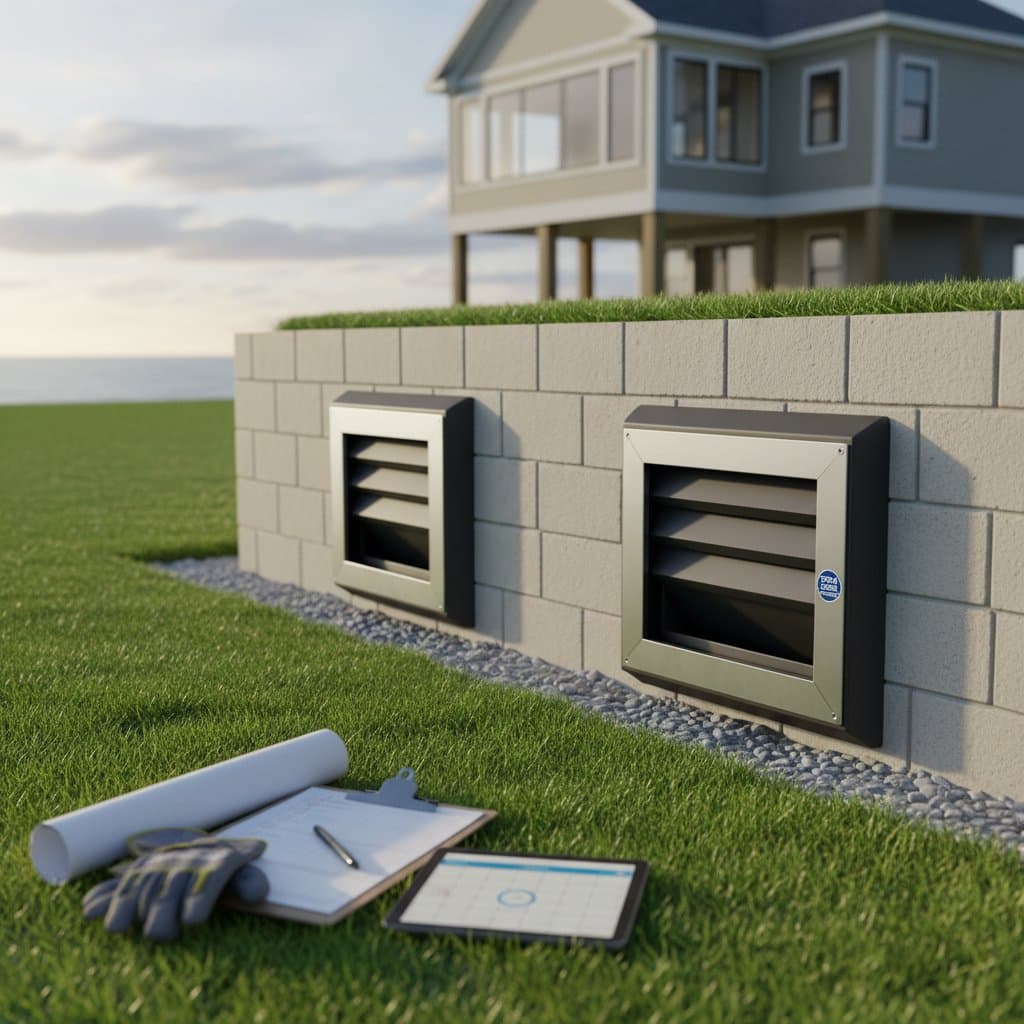
FEMA guidelines mandate one square inch of net opening per square foot of enclosed area, distributed evenly across at least two walls. The required vent quantity aligns with foundation dimensions and enclosed space.
Labor
- Professional installation: $300 to $700 per vent
- Masonry or concrete cutting for retrofits: $400 to $800 additional per wall section
In coastal or high-risk flood areas, labor rates increase due to demand for certified professionals.
Regional Variations
Southern coastal communities feature moderate pricing owing to abundant installers. Inland flood zones or rural areas may incur 15 to 25 percent higher costs from scarce contractor resources.
Timing Advice for Homeowners
Schedule flood vent upgrades in spring for optimal conditions. Mild weather facilitates masonry cutting and sealing, allowing completion prior to summer storms. Early-year supply chains remain stable, though prices escalate in late summer amid heightened demand.
Residents in communities enforcing floodplain management should consult local building authorities beforehand. Certain jurisdictions demand pre- and post-installation inspections to uphold FEMA elevation certificate standards.
Return on Investment and Financial Impact
Compliant flood vents mitigate penalties while yielding tangible benefits through insurance reductions and repair avoidance.
- Insurance savings: 10 to 20 percent decrease on flood policies in applicable zones
- Damage prevention: Effective vents avert foundation wall failures, potentially saving $10,000 or more in repairs
- Property value enhancement: Flood compliance certification appeals to purchasers in coastal or riverside markets
During a prior home sale, the buyer's lender required flood vent certification verification, which expedited closing and prevented costly postponements.
Common Mistakes to Avoid
- Substituting foundation vents for flood vents. These resemble each other yet fail FEMA's automatic operation standards.
- Overlooking elevation specifications. Vents position below base flood elevation yet above ground level.
- Applying screens or covers to vents. Obstructions to water flow invalidate compliance.
- Neglecting documentation. Retain spec sheets and certification reports for all vents.
Circumventing these errors preserves resources and prevents future issues.
Maintaining Your Investment
Installed flood vents demand minimal upkeep, though biannual inspections prove essential. Examine openings for debris, soil, or insect obstructions. Post-flood, clean and verify free operation of vents.
In saltwater proximity, periodically rinse metal vents to inhibit corrosion. For plastic or composite variants, assess UV degradation or fractures. Manufacturers supply replacement seals or components as needed.
Steps to Achieve Compliance
- Review documentation. Locate your elevation certificate and identify existing vent models.
- Assess current setup. Search for certification labels or reports on vents.
- Obtain multiple quotes. Engage at least two licensed flood mitigation specialists.
- Allocate sufficient funds. Anticipate $1,200 to $5,000 based on foundation size and vent numbers.
- Arrange installation pre-storm season. Proactive scheduling circumvents material shortages and premium labor fees.
FEMA's flood vent requirements prioritize home safeguarding over added burdens for owners.