The Role of Flood Vents in Structural Protection
During a flood event, rising water exerts significant hydrostatic pressure on a home's exterior walls and foundation. This force can lead to cracks, wall bowing, or complete failure if unchecked. Flood vents mitigate these risks by permitting water to enter and exit enclosed spaces beneath the structure, thereby balancing internal and external pressures.
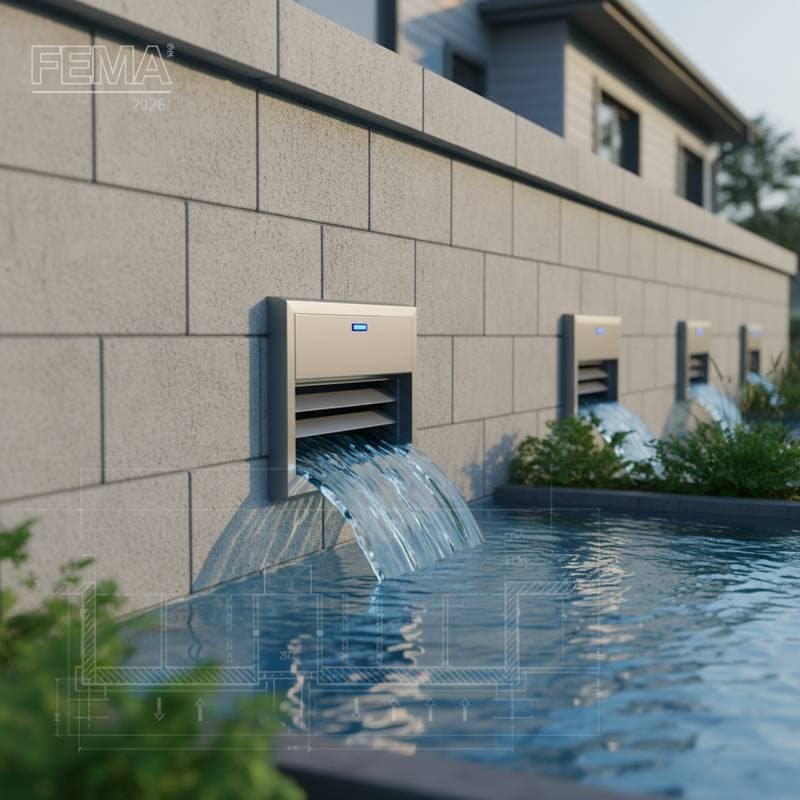
FEMA's 2026 guidelines prioritize automated flood vents that respond to submersion without human intervention. These devices must cover a minimum of one square inch of net open area for every square foot of the enclosed region below the base flood elevation. Beyond physical safeguarding, compliant installations qualify properties for participation in the National Flood Insurance Program, often resulting in premium discounts of up to 20 percent for elevated risk mitigation.
Detailed Cost Analysis
Pricing for flood vents varies based on design complexity, material composition, and installation demands. Manual vents, which require physical opening during floods, start at $150 and reach $250 per unit; they typically feature durable aluminum or galvanized steel construction suitable for moderate exposure.
Automated engineered vents, preferred under the new standards, range from $300 to $600 each. These incorporate mechanisms such as buoyant flaps or electronic sensors that deploy upon water contact, ensuring seamless operation. Labor charges add $75 to $150 per vent for installations into masonry or concrete block foundations; poured concrete applications may incur an additional 10 to 20 percent due to specialized cutting tools.
Most single-family homes necessitate two to six vents, determined by foundation perimeter and local ordinances. A complete retrofit for an average 2,000-square-foot structure thus totals $600 to $2,000 when executed by certified installers, including permits and site preparation.
Influences on Total Expenses
- Foundation Configuration: Elevated homes with crawl spaces demand vents on all sides, potentially doubling the quantity compared to slab-on-grade designs.
- Material Specifications: Opt for 316-grade stainless steel in coastal or corrosive environments; this premium choice extends service life by resisting rust and salt damage.
- Regulatory Variations: Certain jurisdictions enforce supplemental rules, such as elevated vent placement or increased coverage ratios, which elevate material and labor needs.
- Site-Specific Challenges: Accessing buried foundations in older constructions involves excavation, extending timelines and costs by 30 to 50 percent.
Additional considerations include the need for corrosion-resistant anchors and sealants, which add $50 to $100 per opening but prevent long-term water intrusion.
Navigating FEMA Compliance
Under the 2026 framework, flood vents qualify as engineered solutions only if they achieve automatic activation and undergo third-party testing by organizations like the International Code Council. Each unit must bear certification labels verifying compliance with Technical Bulletin 1 standards, ensuring one square inch of unobstructed flow per square foot of enclosure.
Placement remains critical: vents position at least 12 inches above interior grade and spaced no more than 10 feet apart along the foundation perimeter. During insurance evaluations, floodplain managers or adjusters confirm adherence through visual inspections and documentation submission. Failure to meet these criteria risks premium surcharges or claim invalidation, underscoring the value of pre-installation consultations with certified professionals.
Installation Options: DIY or Professional
For straightforward retrofits on accessible block walls, homeowners with construction experience can proceed independently. Begin by marking precise locations per FEMA diagrams, then use a masonry saw to create openings matching the vent dimensions. Secure the frame with stainless steel fasteners, apply silicone caulk for airtight seals, and test functionality in a controlled water simulation.
Professional contractors bring expertise in code interpretation and structural assessments, particularly for complex basements or seismic zones. They handle permitting, ensure even load distribution to avoid wall stress, and integrate vents with broader waterproofing strategies like sump pumps. In high-velocity flood areas, expert oversight prevents common pitfalls such as improper sealing that could exacerbate erosion.
Strategies for Cost Reduction
Insurance providers frequently incentivize proactive measures; certified flood vents can yield discounts averaging 10 to 15 percent on policies. Review your current coverage for eligibility and submit installation certificates promptly to activate savings.
Integrate vent projects with ongoing maintenance, such as foundation crack repairs or perimeter drainage improvements, to consolidate labor fees. For instance, coordinating with a regrading effort minimizes redundant digging and equipment rental.
Explore community programs through local flood control districts; rebates up to $500 per property often support upgrades to automated systems, prioritizing vulnerable neighborhoods.
Steps to Implement Flood Vent Upgrades
Start by obtaining a flood zone determination via your county's mapping portal or a professional survey, identifying elevation data and risk levels. Engage a structural engineer to calculate exact vent quantities and optimal positions based on your home's blueprint.
Select products from reputable manufacturers like FloodMaster or SmartVent, verifying ICC-ES listings for 2026 compliance. Schedule installations during dry seasons to facilitate access and curing of sealants.
Post-installation, maintain vents by clearing debris annually and inspecting mechanisms after heavy rains. These enhancements not only fortify your property against flood forces but also streamline insurance processes, delivering long-term financial and safety advantages.