2026 Multigenerational Home Layout Trends for Families
Families are rethinking how they live together. Rising housing costs, longer life spans, and the value of close family support have made multigenerational homes more common. These layouts bring grandparents, parents, and children under one roof while maintaining privacy, comfort, and independence for everyone.
The most successful designs balance shared spaces with individual retreats. They create homes that feel both connected and spacious.
Key Facts at a Glance
- Average cost to build or remodel for multigenerational living: 250000 dollars to 600000 dollars
- Typical project timeline: 4 to 10 months
- Lifespan of design relevance: 25 to 40 years
- DIY difficulty: High, professional design strongly recommended
Why Multigenerational Living Is Growing
More families are choosing to live together for practical and emotional reasons. It can reduce expenses, simplify caregiving, and strengthen family ties. Parents can help with childcare, while adult children can assist aging relatives without moving them into assisted living.
The challenge is designing a home that respects every generation needs for privacy and connection. Architects and designers have responded with flexible layouts that adapt as families change. Convertible rooms, accessible bathrooms, and secondary suites rank among the most requested features.
Core Layout Trends for 2026
Private Suites with Shared Access
The modern multigenerational layout often includes at least one private suite. This suite usually features a bedroom, bathroom, and small kitchenette. Some designs include a separate entrance so grandparents or adult children can come and go freely.
The shared connection point, often through the kitchen or living area, allows daily interaction without crowding. These suites provide comfort and independence. They reduce tension and help family members maintain routines. They also serve later as guest quarters or rental units.
Dual Primary Bedrooms
Two primary bedrooms with ensuite bathrooms give equal comfort to both generations. This setup works well for families where parents and grandparents share the same home but want equivalent amenities. Having two large suites on separate floors or opposite wings of the house ensures quiet and privacy for both.
Flexible Common Areas
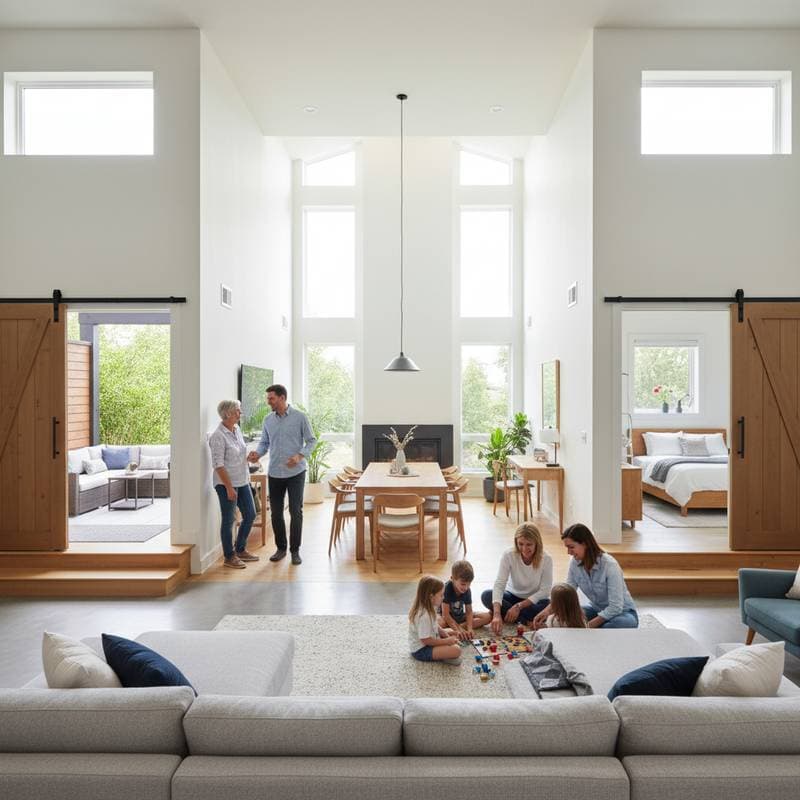
Open layouts still dominate, but zoning is key. Instead of one massive open space, designers create flexible areas that can be adjusted with sliding doors, movable partitions, or furniture placement. Families can enjoy shared meals or movie nights together, then convert the space into quieter zones when needed.
Sound management plays a major role. Acoustic panels, soft furnishings, and strategic wall placement help reduce noise between generations, especially when young children and seniors share a home.
Accessible and Universal Design
Accessibility is no longer an afterthought. Wider doorways, no-step entries, lever handles, and curbless showers make the home safer for older adults and easier for parents pushing strollers. Universal design adds long-term value because it supports aging in place and minimizes future renovation costs.
Secondary Kitchens and Laundry Rooms
A second small kitchen or kitchenette gives each generation flexibility for meals and privacy. Similarly, adding a secondary laundry space on another floor prevents bottlenecks in daily routines. These features are highly practical for homes with multiple adults managing their own schedules.
Outdoor Living for All Ages
Patios, covered porches, and garden paths are being designed for both relaxation and accessibility. Outdoor kitchens and seating areas allow families to gather in open air settings while still offering quiet corners for reading or gardening. Smooth transitions between indoor and outdoor spaces make the home feel larger and more connected.
Costs and Budget Factors
Converting or building a multigenerational layout varies widely in cost. A full remodel with added suites or wings can start around 250000 dollars and rise to over 600000 dollars depending on size, materials, and location. Building from scratch gives more freedom to incorporate separate entrances and structural changes.
Main Cost Drivers
- Layout complexity: Adding kitchens, bathrooms, and private entrances increases plumbing and electrical work.
- Accessibility features: Ramps, wider halls, and upgraded bathrooms add material and labor costs.
- Finishes and materials: Durable, low-maintenance surfaces cost more initially but hold up better over time.
- Local labor rates: Construction costs vary by region and availability of skilled contractors.
Ways to Save
- Convert existing space. Transforming a basement, attic, or garage into a private suite is usually cheaper than adding new square footage.
- Plan shared utilities. Keeping plumbing and electrical systems close together limits infrastructure costs.
- Choose multi-use furniture. Foldaway beds and movable partitions can create flexible zones without major construction.
- Work with a design-build firm. An integrated team can reduce project delays and design errors.
Planning Your Layout Step by Step
Step 1: Define Family Needs
List who will live in the home and how long each person expects to stay. Consider mobility, privacy, and access to shared areas. A clear understanding of everyone priorities helps set realistic goals.
Step 2: Assess Current Space
If you are remodeling, measure existing rooms and identify load-bearing walls. Knowing what can be changed safely will help you decide whether to expand or reconfigure.
Step 3: Establish Zones
Group spaces into private, semi-private, and shared categories. For example, bedrooms and bathrooms belong to private zones, while living and dining areas are shared. Semi-private spaces might include studies, playrooms, or small lounges.
Step 4: Design for Accessibility
Add universal design features early in planning. It is easier and cheaper to include ramps, wider hallways, and accessible bathrooms from the start than to retrofit later.
Step 5: Hire a Professional
A licensed architect or design-build contractor ensures the layout meets codes, ventilation requirements, and accessibility standards. They can also suggest creative ways to balance privacy with connection.
Step 6: Review Long-Term Flexibility
Think beyond current needs. Could a suite later become a rental unit or workspace. Planning with flexibility in mind gives your home lasting value.
Pros and Cons of Multigenerational Layouts
Pros
- Shared expenses reduce financial strain
- Built-in childcare or elder support
- Stronger family relationships and security
- Efficient use of space and utilities
Cons
- Potential for reduced privacy if design is poor
- Higher upfront renovation or building costs
- Family schedules may conflict
- Requires clear communication and boundaries
DIY vs Professional Design
Some homeowners handle minor upgrades on their own, such as adding partitions or updating finishes. Larger projects that involve plumbing, electrical, or structural changes should always be handled by professionals. A licensed contractor ensures safety and compliance with local codes.
Professional designers can also provide 3D models and zoning layouts that prevent costly mistakes. As a general rule, if your plan involves adding bathrooms, kitchens, or separate entrances, hire a pro. For smaller adjustments like furniture layout, lighting, or soundproofing, a DIY approach is fine.
Long-Term Benefits
Multigenerational homes often appreciate faster than traditional layouts because they appeal to a wide range of buyers. They also reduce the cost of senior care and childcare, which can save families thousands each year. Energy efficiency improves when households share utilities and appliances, lowering monthly bills.
The emotional benefits are equally valuable. Families share memories, meals, and milestones without the stress of long commutes or frequent travel. When designed well, these homes support independence and connection in equal measure.
Next Steps for Implementation
If you are considering a multigenerational layout, start by assessing your current home potential. Schedule a consultation with a residential designer or contractor to discuss what can be achieved within your budget. Bring your family into the conversation early so everyone needs are heard.
Upgrading for multigenerational living is more than a renovation project. It is an investment in family stability and comfort. With thoughtful planning and professional guidance, your home can adapt as your family grows and changes.