Understanding the Savings Potential of 2025 Smart Thermostats
Rising energy costs continue to challenge homeowners across the United States, making efficiency upgrades essential for managing expenses. Home renovation projects face increased pressures beyond inflation, as utility bills climb steadily. Smart thermostats represent a targeted solution that delivers rapid returns on investment. The 2025 models introduce advanced features that enhance usability and waste reduction, surpassing previous generations in performance.
These devices integrate seamlessly with modern home systems, providing precise control over heating and cooling. Homeowners report noticeable improvements in comfort levels alongside financial benefits. By adopting such technology, individuals position themselves to counteract escalating energy demands effectively.
Mechanisms Behind Energy Efficiency Gains
Smart thermostats achieve substantial savings through intelligent automation tailored to user habits. For instance, these units analyze occupancy patterns and adjust temperatures proactively, preventing unnecessary operation during unoccupied periods. The 2025 iterations incorporate geofencing, which uses location data from connected devices to activate or deactivate systems upon detecting arrivals or departures.
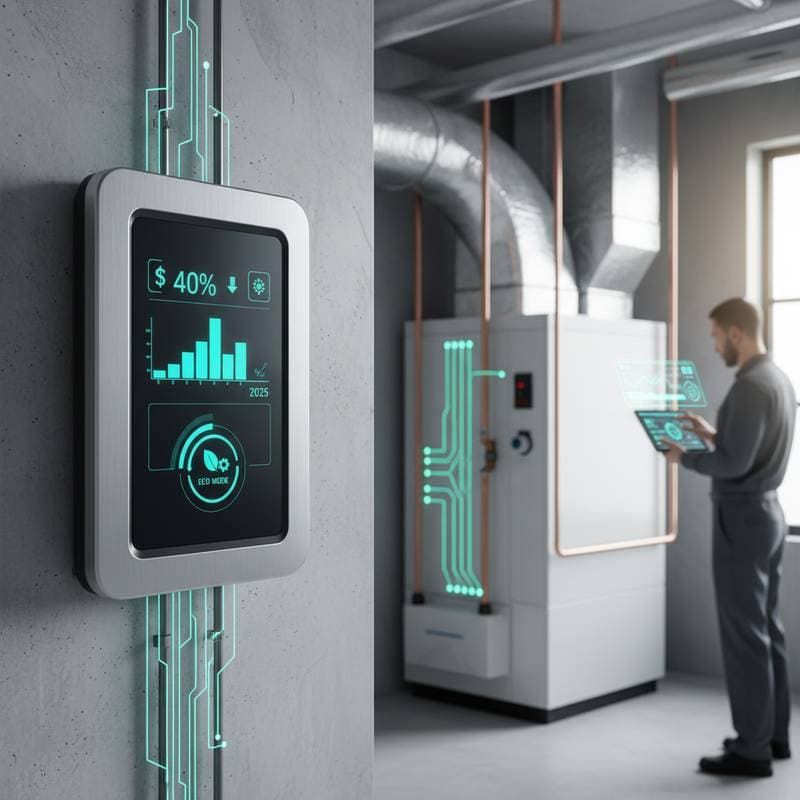
Weather-responsive algorithms further optimize performance by factoring in local forecasts and real-time conditions. This adaptability ensures settings align with external variables, minimizing overworking of HVAC components. Depending on insulation quality and usage consistency, users can anticipate reductions in energy consumption ranging from 25 to 40 percent.
Integration with smart home ecosystems amplifies these effects. Compatibility with platforms like voice assistants allows for remote adjustments, while energy usage reports provide insights into consumption trends. Such data empowers homeowners to refine habits, compounding the device's inherent efficiencies over time.
Evaluating Installation Approaches
Determining the right installation method requires assessing the complexity of your existing HVAC setup. For straightforward systems, such as single-stage furnaces or basic air handlers, a do-it-yourself process proves feasible and cost-effective. However, multi-stage systems, heat pumps, or older configurations demand professional intervention to avoid risks like electrical shorts or inefficient operation.
The DIY installation follows a structured sequence to ensure safety and accuracy:
- Shut off power to the HVAC unit at the breaker panel.
- Remove the old thermostat, labeling each wire by color and function.
- Secure the new baseplate to the wall and reconnect wires according to the manufacturer's diagram.
After mounting, pair the device with your Wi-Fi network via the companion application. The setup interface guides calibration and enables customization of schedules. Professional services, costing between $100 and $300, become advisable for zoned systems or radiant heating, preserving warranty coverage and system integrity.
To secure competitive bids, request quotes from at least three certified technicians. This step confirms compatibility and identifies any underlying issues, such as outdated wiring, that could impact performance.
Capitalizing on Rebates and Purchase Strategies
Current market conditions favor timely investments in smart thermostats due to robust incentive programs. Utilities across many regions provide rebates ranging from $50 to $150 for eligible ENERGY STAR-certified models. Federal tax credits under energy efficiency initiatives can offset an additional 30 percent of costs, often recouping half the purchase price upfront.
Popular 2025 models include the Nest Learning Thermostat, priced at approximately $250, which excels in adaptive learning; the Ecobee SmartThermostat, around $220, with built-in air quality monitoring; and the Honeywell Home T10, at $200, offering robust zoning support. Each model supports remote access and integrates with major smart home protocols.
Supply disruptions in electronics persist, so early purchasing mitigates risks of shortages or price hikes. Avoid delays until heating season peaks, as demand surges lead to extended wait times. Research local utility websites for rebate applications, submitting proof of installation promptly to maximize returns.
Sustaining Long-Term Efficiency and Comfort
Beyond immediate bill reductions, smart thermostats contribute to overall home value and system longevity. They promote even HVAC operation, reducing wear on components and potentially extending equipment life by 5 to 10 years. Maintenance demands decrease, as predictive alerts notify users of filter changes or performance anomalies.
Home resale appeal increases with documented energy features, appealing to eco-conscious buyers. Annual savings of $150 to $300, based on average household usage, accumulate into significant long-term gains. Pairing the thermostat with insulation upgrades or smart vents amplifies these outcomes.
To proceed, evaluate your current setup against model specifications. Verify rebate eligibility and select an installation path aligned with your technical comfort level. Professional consultations ensure seamless integration, paving the way for optimized energy use and enhanced daily living.