Preparing for the R-454B Refrigerant Transition in Spring
Home renovation expenses in the United States are set to increase due to regulatory changes in the HVAC sector. The industry undergoes a significant shift as new refrigerant standards come into effect. Homeowners planning air conditioning replacements or services this spring must grasp the implications of the R-454B refrigerant transition on expenses, choices, and ongoing comfort.
Refrigerant transitions present challenges for scheduling and compliance. Past changes have led to delays in parts and adjustments to building codes, resulting in discomfort during peak heat periods. Proactive preparation ensures smoother upgrades and avoids unexpected disruptions.
Understanding the Importance of the R-454B Transition
The Environmental Protection Agency enforces stricter guidelines on refrigerants based on their global warming potential. The widely used R-410A refrigerant faces phase-out in residential HVAC applications. R-454B emerges as the primary alternative, delivering reduced environmental harm alongside notable effects for property owners.
Industry stakeholders adjust to updated equipment, production processes, and inventory management. These adaptations create variability in pricing, particularly for R-410A-compatible systems. Leaks or failures in existing units may drive up refrigerant replacement expenses significantly.
This transition influences homeowners in three primary ways:
- System Compatibility: Retrofitting R-410A systems with R-454B proves impossible. Complete system replacement becomes essential.
- Service Availability: Technicians require specialized certification and equipment for R-454B handling. Availability varies among contractors.
- Material Costs: Disruptions in supply chains and import tariffs elevate prices for essential components like compressors, line sets, and the refrigerant.
Evaluating DIY Preparation Against Professional Installation
Initial reactions to the R-454B transition often include assessing personal involvement in preparation. Basic maintenance tasks such as filter changes, thermostat adjustments, and coil cleaning fall within homeowner capabilities. However, refrigerant-related work demands professional expertise.
Consider these factors:
- DIY Limitations: R-454B involves mildly flammable properties, necessitating rigorous safety measures. Homeowners lack the authorization and tools for installation or recharging.
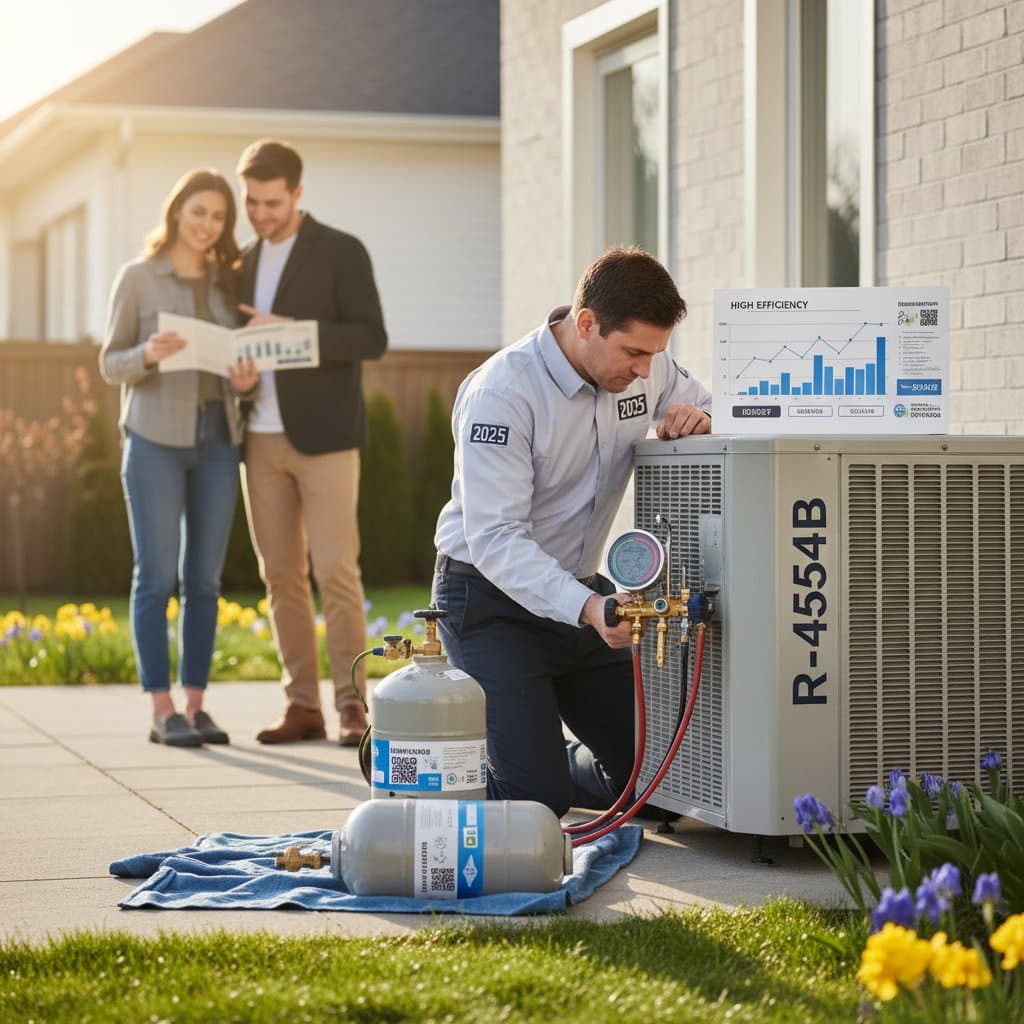
- Professional Requirements: Licensed HVAC specialists must hold current EPA certification to service or install R-454B systems legally. They utilize appropriate recovery equipment, detection devices, and charging apparatus.
- Safety Considerations: Refrigerant operations involve elevated pressures and exposure hazards. Incorrect procedures risk fires or warranty invalidation.
Homeowners can contribute by preparing the installation site, such as removing obstacles around the condenser unit, evaluating electrical capacity for upgrades, or enhancing insulation in accessible areas. Professional oversight remains mandatory for all refrigerant tasks.
Verify contractor qualifications by requesting proof of R-454B-specific training from manufacturers prior to agreement.
Impact of R-454B on Energy Efficiency
R-454B-equipped systems achieve 5 to 10 percent greater energy efficiency than R-410A models. Enhanced thermodynamic characteristics allow units to operate at lower temperatures with reduced cycling frequency, easing compressor workload.
Homeowners benefit from:
- Reduced Utility Expenses: Annual savings range from $100 to $300, influenced by regional climate and unit capacity.
- Decreased Noise Levels: Smoother compressor performance stems from lower discharge pressures.
- Prolonged Equipment Durability: Minimal component stress leads to fewer malfunctions over time.
Select units with SEER2 ratings of 16 or above to optimize initial investment against future gains. These models provide reliable performance in diverse conditions.
Leveraging Incentives and Financing for R-454B Upgrades
Several programs mitigate the elevated initial costs of R-454B systems during the spring transition period.
- Federal Tax Credits: Eligible energy-efficient heat pumps and air conditioners qualify for up to $2,000 in credits.
- Utility Rebates: Regional initiatives provide $300 to $800 for adopting low-global-warming-potential refrigerants.
- Manufacturer Promotions: Companies including Carrier, Lennox, and Trane extend rebates linked to R-454B installations.
- Financing Plans: Contractor partnerships offer low-interest or zero-interest loans spanning six to twelve months.
Estimate energy cost reductions through utility-provided calculators or online estimators. Incentives combined with bill savings accelerate return on investment.
Ensuring Long-Term Performance Through Maintenance
Post-installation care protects the R-454B system investment and prevents expensive repairs. Arrange professional inspections biannually, in spring and fall. These sessions cover refrigerant pressure verification, coil decontamination, and electrical system reviews.
Homeowners manage routine duties independently:
- Change air filters every 60 to 90 days to maintain airflow.
- Clear debris like leaves and mulch from outdoor units regularly.
- Track thermostat configurations and indoor humidity to sustain optimal conditions.
Inadequate upkeep reduces operational life and nullifies warranties. Proper maintenance supports 15 years of reliable, efficient service with limited interruptions.
Steps to Secure Your Spring HVAC Upgrade
Begin by assessing your current system's age and condition through a professional evaluation. Research certified contractors experienced in R-454B installations within your area. Compile incentive applications and financing options early to streamline budgeting.
Schedule consultations before peak season demand rises. Confirm all equipment meets local codes and efficiency standards. This approach minimizes costs, ensures compliance, and delivers sustained home comfort.