Examining ADU Construction Loans
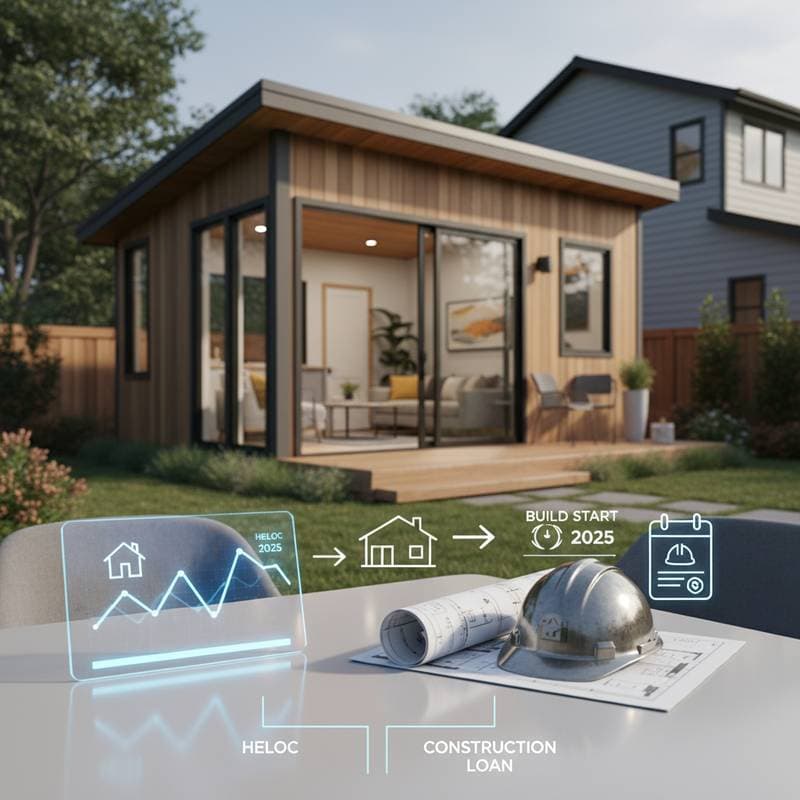
An ADU construction loan delivers targeted funding for new builds or major renovations. These short-term loans, lasting six to 18 months, disburse funds in draws tied to construction progress. Upon completion, they convert to a permanent mortgage or refinance into a standard home loan. Coverage extends to land preparation, building materials, contractor fees, and permitting.
Operations of a Construction Loan
- Disbursement process: Funds release in increments after inspections verify milestones like foundation pouring or framing.
- Interest structure: Interest-only payments during construction at rates of 7 to 10 percent, converting to fixed or adjustable long-term rates.
- Term length: Construction phase up to one year, followed by 15 to 30 years of repayment.
Such loans prove suitable for detached granny flats demanding new infrastructure, including foundations, utilities, and zoning compliance.
Benefits of a Construction Loan
- Tailored for builds: Aligns directly with construction timelines and expenses.
- Comprehensive coverage: Finances full project scope, including contingencies up to 10 percent of budget.
- Rate stability: Fixed options post-construction shield against market volatility.
- Quality assurance: Lender-mandated inspections maintain standards and prevent overruns.
Challenges of a Construction Loan
- Extensive documentation: Demands blueprints, cost estimates, and builder contracts for approval.
- Elevated fees: Closing costs reach 3 to 6 percent, plus inspection and appraisal charges.
- Extended processing: Approvals span two to six weeks, delaying starts.
- Rigorous qualifications: Requires 20 percent down payment and debt-to-income ratios below 43 percent.
Essential Considerations for Selecting Financing
Several elements shape the ideal financing decision for a granny flat.
- Available Equity: Substantial equity, at least $50,000, facilitates HELOC access; limited equity may necessitate construction loans with down payments.
- Project Scale: Modest renovations, like attic conversions costing $40,000 to $80,000, align with HELOCs; full builds exceeding $150,000 favor construction loans.
- Rate Environment: In a rising rate climate projected for 2025, fixed-rate construction loans provide predictability over variable HELOCs.
- Credit Profile: Scores above 680 secure better terms; below 620 may limit options or increase rates by 1 to 2 percent.
- Income Reliability: Stable earnings covering 28 percent of income for housing debts improve eligibility.
- Project Duration: HELOCs enable rapid funding for quick-turnaround projects; construction loans offer structured support for extended timelines.
Costs vary: HELOCs average 0.5 to 1 percent annual fees plus variable interest, while construction loans incur 1 to 2 percent origination fees and higher initial rates. Timelines differ, with HELOC setup in one week versus one month for construction loans.
Balancing DIY and Professional Efforts
Granny flat development entails intricate elements such as zoning permits, structural engineering, and utility integrations. While certain aspects permit owner involvement, core construction demands certified expertise to adhere to regulations and satisfy lender requirements.
Suitable for DIY:
- Interior painting and trim installation
- Flooring selection and basic laying
- Simple landscaping and pathway additions
Requiring Professionals:
- Foundation excavation and pouring
- Electrical wiring and plumbing rough-ins
- Roofing, framing, and insulation applications
Selecting reputable contractors involves checking state licenses, securing proof of liability insurance, and reviewing past projects. Contracts should detail timelines, payment schedules, and change order protocols to safeguard the investment.
Steps to Secure and Execute Financing
Initiate the process by evaluating home equity through a free appraisal or online calculator. Compare quotes from at least three lenders, focusing on rates, fees, and terms specific to ADU projects. Prepare documentation including income statements, credit reports, and preliminary designs.
For HELOCs, apply through your current mortgage provider for streamlined processing. For construction loans, partner with specialized lenders experienced in ADU financing. Pre-approval accelerates contractor negotiations and permit applications.
Realizing Benefits Through Strategic Planning
Effective financing transforms a granny flat from concept to asset. A HELOC empowers agile funding for adaptable projects, while a construction loan delivers disciplined support for ambitious builds. Both avenues, when chosen wisely, amplify property worth, foster family proximity, and yield financial returns. With meticulous preparation, your ADU becomes a enduring enhancement to home and lifestyle.