Financing Your Granny Flat: HELOC vs. Construction Loans
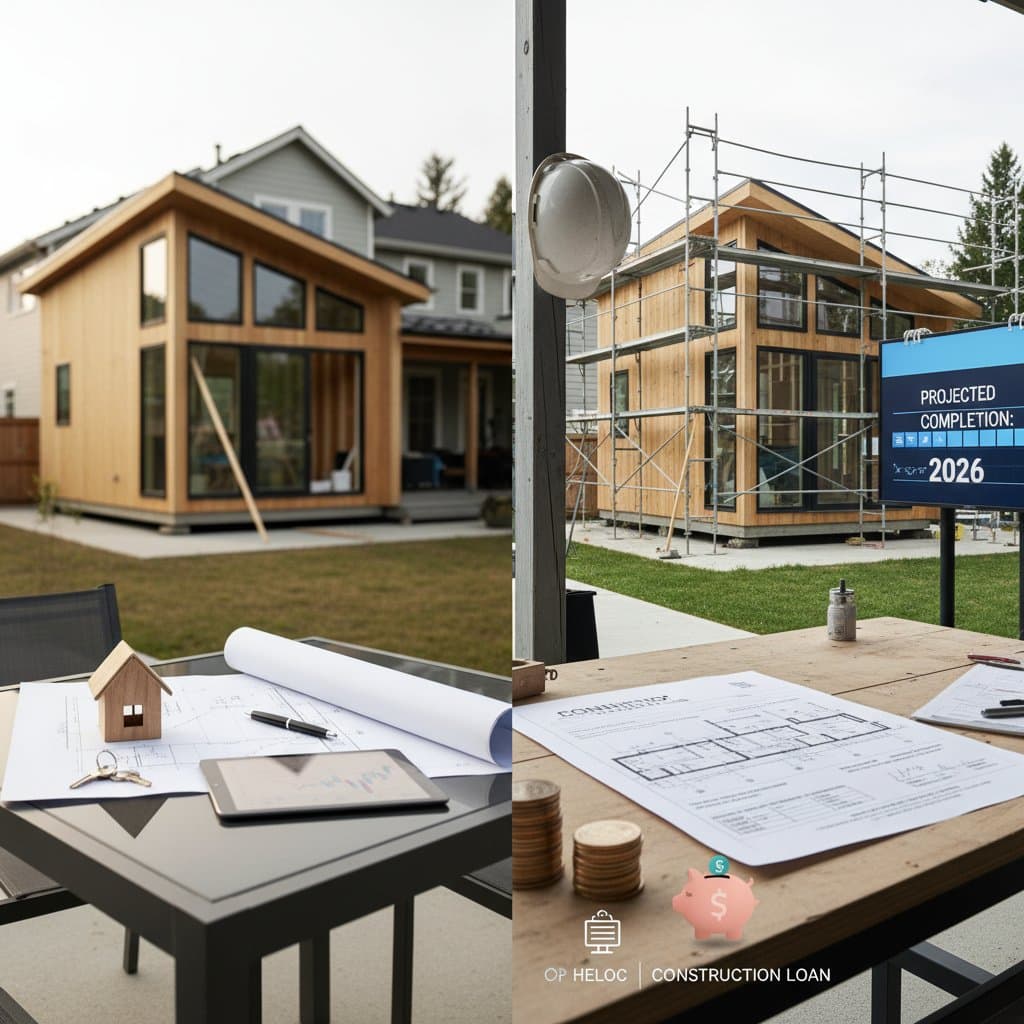
Homeowners often dream of expanding their property with a granny flat, yet funding remains a primary barrier. Many face the challenge of covering costs without depleting savings. This guide examines two key financing options: the home equity line of credit (HELOC) and the construction loan. Each serves distinct needs based on project scope, financial position, and risk preferences.
For those targeting a 2026 build, early familiarity with these choices streamlines the path from concept to completion. Proper selection minimizes delays and aligns funding with design and permitting phases.
Key Differences Between HELOC and Construction Loans
A home equity line of credit (HELOC) allows borrowing against accumulated home equity. It functions as a revolving credit line, where interest applies only to drawn amounts. Lenders typically approve HELOCs for home-related expenses, such as renovations or additions, due to their adaptable nature.
In contrast, a construction loan provides short-term funding specifically for new builds. Disbursements occur in phases, tied to project milestones like foundation completion or framing. Upon finishing construction, borrowers usually refinance into a standard mortgage for long-term repayment.
Selecting the appropriate option hinges on factors such as existing equity levels and anticipated cost variability. Homeowners with established equity often favor HELOCs for ongoing projects, while those initiating ground-up builds benefit from construction loans' structured oversight.
Decision Framework: Matching Loans to Your Project Needs
Opt for a HELOC When:
- Substantial home equity exists, enabling access to funds without new appraisals.
- The project involves self-management or direct subcontractor hiring for cost efficiency.
- Tolerance for variable interest rates aligns with financial planning.
- Total costs remain below $200,000, suiting smaller-scale ADUs like garage conversions.
This approach proved effective for a garage-to-studio transformation, where phased payments matched incoming invoices. Adjustments to scope occurred seamlessly, though interest rate fluctuations introduced budgeting challenges.
Select a Construction Loan When:
- The build starts from the ground up, requiring comprehensive funding for site preparation and erection.
- Engagement of a general contractor demands milestone-based payments for accountability.
- Preference leans toward fixed rates that evolve into permanent financing.
- Larger projects, such as detached units, necessitate lender-monitored progress to mitigate overruns.
In one case, this loan type ensured disciplined execution for a detached ADU. Pre-draw inspections verified quality, reducing unexpected issues and enhancing builder reliability.
Evaluating Return on Investment and Long-Term Benefits
Accessory dwelling units (ADUs) rank among the highest-yield home improvements. Regional factors influence outcomes, but expect a 15 to 25 percent property value increase. A one-bedroom granny flat may generate $18,000 to $36,000 in yearly rental revenue, depending on local demand.
HELOC and Investment Potential
- Fund allocation flexibility aids in precise cost management and opportunistic adjustments.
- Interest payments qualify for tax deductions when applied to qualifying home enhancements.
- Suited for short-term rentals or family accommodations, maximizing immediate utility.
This option supports agile projects where equity utilization drives quick value addition.
Construction Loan and Investment Potential
- Phased funding facilitates ambitious, high-standard constructions with professional input.
- Enhanced oversight often elevates resale appeal through verified build quality.
- Optimal for complex designs like multi-story or detached ADUs, where precision controls expenses.
Structured loans align with investments prioritizing durability and market competitiveness.
Essential Professional Involvement
Financed builds demand expert input to meet regulatory and safety standards. Key areas include:
- Structural Design and Engineering: Secure permits through certified plans that address load-bearing elements and seismic compliance.
- Electrical and Plumbing Systems: Engage licensed specialists to ensure code adherence and avoid costly rework.
- Financial and Loan Advisory: Consult mortgage brokers to evaluate rates, terms, and eligibility across lenders.
Prepare detailed budgets for lender review, breaking down expenses into categories such as framing ($20,000–$40,000), roofing ($10,000–$15,000), mechanical installations ($15,000–$25,000), interior finishes ($20,000–$30,000), and a 10–15 percent contingency. Such documentation accelerates approvals and clarifies expectations.
Steps to Secure Financing and Launch Your Build
Begin by assessing home equity via a current appraisal and reviewing credit reports for accuracy. Compile design sketches, obtain three contractor bids, and estimate full project expenses, including permits ($1,000–$5,000) and utilities connections ($5,000–$10,000).
Approach at least two lenders for personalized quotes on HELOC and construction options. Pose these targeted inquiries:
- What maximum loan-to-value ratio applies to my property?
- Do interest-only payments extend through the construction period?
- How does the lender handle budget or timeline exceedances?
- Does the construction loan include seamless conversion to a permanent mortgage?
Compare responses in a spreadsheet, factoring in fees, rates, and repayment structures. This analysis reveals the best fit for your risk profile and schedule.
Realizing Value Through Strategic Planning
Constructing a granny flat enhances property versatility and equity. Whether leveraging home equity or pursuing dedicated construction financing, thorough preparation ensures success. Master your financial metrics, establish boundaries, and collaborate with vetted experts.
This methodical approach transforms funding decisions into enduring assets, providing family housing or revenue streams for years ahead.