Key Takeaways
- AI drones identify early roof damage, such as minor cracks, displaced shingles, and concealed moisture, to avert leaks.
- Schedule spring inspections to address winter-induced wear and avoid escalating repair costs.
- Advanced imaging combined with data analytics generates targeted maintenance strategies that prolong roof longevity.
What AI Drones Detect in Roof Inspections
AI drones pinpoint structural and surface imperfections that elude naked-eye detection, even during ladder-based checks.
Detection Capabilities
- Fine cracks, granule loss, and irregular surfaces
- Moisture accumulation under shingles
- Insulation deficiencies via thermal imaging
- Comprehensive data for generating predictive maintenance assessments
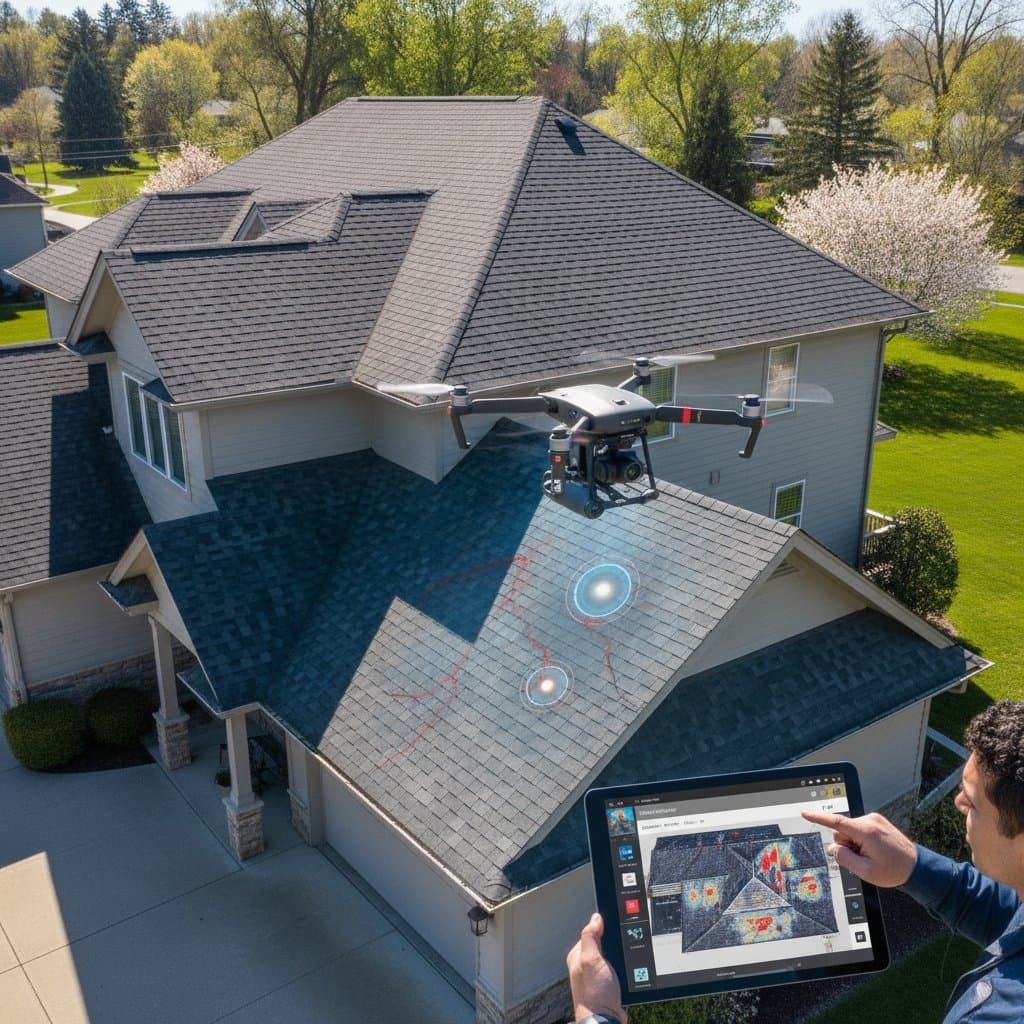
Equipped with high-resolution cameras and thermal sensors, AI drones measure subtle temperature variations that signal trapped moisture or inadequate insulation. During the scan, onboard AI algorithms analyze images in real time to highlight problematic zones. This early detection enables targeted interventions that mitigate risks like mold proliferation or structural weakening long before visible symptoms emerge.
Optimal Timing for Drone Roof Inspections
Early spring stands out as the prime period for inspections, following snowmelt and preceding intense rainfall.
Post-winter assessments reveal damage from freeze-thaw cycles before water penetrates attics or insulation layers. This timing also prepares roofs for summer's thermal expansion, which can widen existing fissures or dislodge materials. Booking an inspection promptly provides ample opportunity to complete repairs ahead of seasonal pressures.
Recommended Inspection Schedule
- Early Spring: Evaluate winter impacts and fortify against leaks.
- Mid-Summer: Inspect for thermal degradation, including warped shingles or degraded seals.
- Late Fall: Verify gutter functionality and flashing integrity prior to cold weather.
Adopting this schedule establishes a systematic approach to roof preservation across seasons.
Limitations of AI Drone Inspections
Drones provide superior detection but cannot substitute for expert evaluation or hands-on remediation.
While proficient in visual and thermal scanning, drones do not perform material strength tests or execute fixes. Adverse weather, such as overcast skies or strong winds, may compromise flight stability and image quality. Roofs with intricate designs, steep pitches, or surrounding vegetation often require supplementary manual examinations. Position drone inspections as an initial diagnostic tool that equips professionals with precise guidance for subsequent actions.
Emerging Practices in Spring Roof Care
Homeowners increasingly integrate AI drone inspections with sustainable modifications and automated monitoring systems.
Current practices focus on foresight and resource conservation. Drone insights inform the application of cool-roof coatings, installation of recycled materials, or optimization of solar arrays. Thermal data reveals high-exposure zones, facilitating strategic placements for energy-efficient features like vents or panels. As these technologies democratize, they empower routine homeowners to devise enhancements that harmonize durability, visual appeal, and environmental responsibility.
Frequently Asked Questions
Does a drone inspection risk damaging the roof?
No. Drones operate at a distance without physical contact, ensuring a fully non-invasive process.
What permissions are required for drone operations?
Certified pilots manage all compliance needs. Homeowners simply designate the inspection zone.
How much time does an AI drone inspection require?
Standard residential roofs receive full coverage in less than 30 minutes; expansive or detailed structures may extend to an hour.
Can drones identify leaks hidden under shingles?
Yes. Thermal imaging detects anomalous heat patterns indicative of subsurface moisture.
Strategies for Sustaining Roof Performance
Dedicate spring efforts to roof upkeep alongside exterior enhancements. AI drone technology streamlines this process, delivering efficient diagnostics that minimize risks and maximize protection for your home investment.