Key Takeaways
- Modular bathroom renovations complete installation in as little as three days, blending rapid timelines with sophisticated aesthetics.
- Prefabricated elements such as wall panels, plumbing modules, and fixture assemblies minimize on-site disruption and labor requirements.
- This approach aligns with contemporary demands for precise design and reduced interference in daily routines.
Why Are 3-Day Modular Bathroom Renovations Trending?
Homeowners seek efficient upgrades that maintain high standards of customization without extended timelines or excessive disorder. Modular bathroom systems achieve this equilibrium through pre-engineered components that assemble swiftly, much like precision-engineered modules in architecture.
The shift toward modular designs transforms the renovation experience from a prolonged ordeal into a streamlined project. These systems arrive fully prepared for integration, allowing a complete bathroom overhaul over a single extended weekend. This method appeals broadly due to its controlled environment, reliable budgeting, and elevated aesthetic outcomes.
Highlights
- Speed: Projects finish in approximately three days, with limited need for structural alterations.
- Sustainability: Off-site production minimizes construction waste and ensures material accuracy.
- Design Variety: Options span serene spa-inspired palettes to contemporary minimalist configurations.
- Budget Stability: Standardized kits eliminate unforeseen expenses common in bespoke renovations.
What Exactly Is a Modular Bathroom?
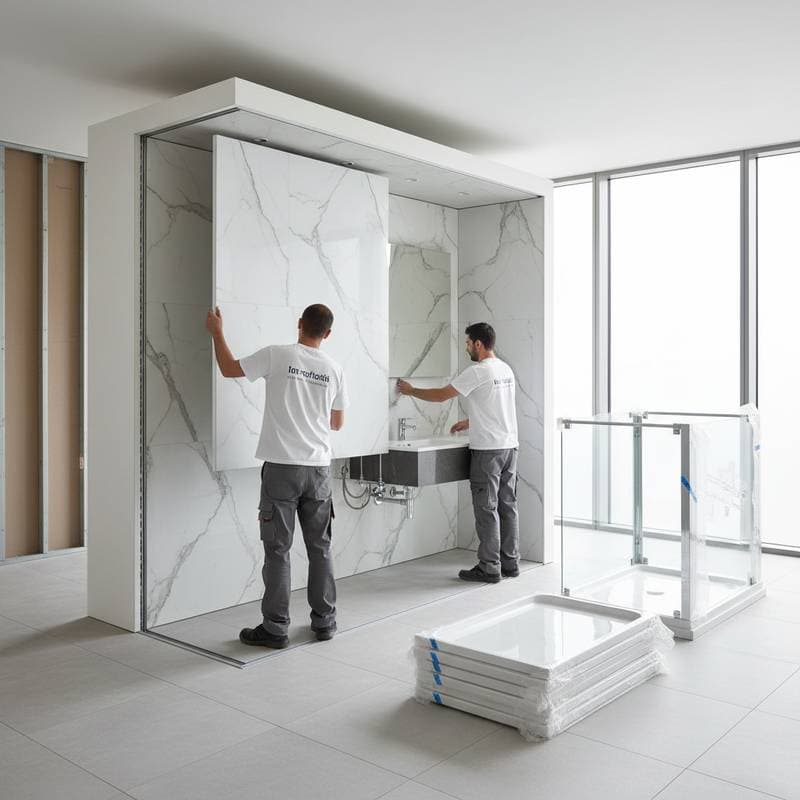
A modular bathroom consists of off-site fabricated walls, flooring, and fixtures designed for seamless on-site assembly. These elements interlock with exact tolerances, produced in factory settings to eliminate common installation errors.
Components such as wall panels, floor bases, and integrated plumbing arrive pre-assembled. For instance, shower enclosures, storage units, and sanitary ware sections connect directly to existing infrastructure, with installers focusing solely on utility hookups and perimeter sealing. This systematic approach mitigates the variables that often complicate conventional remodeling efforts.
Pros and Cons of Modular Bathroom Systems
| Category | Pros | Cons |
|---|---|---|
| Installation Time | Typically 2 to 4 days | Reduced adaptability after order placement |
| Design Precision | Superior factory quality assurance | Additional fees for non-standard dimensions |
| Waste Reduction | Decreased on-site debris and errors | Potential need for expert installers |
| Cost Predictability | Transparent upfront quotations | Constraints on spontaneous modifications |
How Does a 3-Day Modular Renovation Work?
Pre-fabricated parts deliver to the site in sequence, adhering to a structured installation protocol. Day one clears existing installations and prepares foundational surfaces. Day two erects structural panels and flooring, incorporating inherent moisture barriers.
Day three integrates sanitary fixtures, electrical elements, and surface treatments. The process maintains a unified workflow, avoiding the scheduling conflicts typical of multi-trade traditional projects. Precise measurements inherent to modular design enable efficient progression without adjustments to tiling or framing.
Step-by-Step Breakdown
- Design Selection: Select configurations and surface options via interactive digital platforms.
- Pre-Manufacture: Fabricate panels, utility modules, and hardware in controlled facilities.
- Delivery and Preparation: Demolish outdated elements and ensure surface uniformity.
- Assembly: Secure panels and bases using interlocking mechanisms, followed by fixture placement.
- Final Touches: Apply sealants, install illumination, and add functional accessories.
This phased methodology suits high-traffic residences or auxiliary areas, such as vacation home bathrooms, by confining disruption to brief periods.
Which Design Styles Are Hot Right Now?
Current preferences in modular bathrooms emphasize tranquil palettes, subdued surfaces, and embedded illumination for a cohesive ambiance. Professionals favor earthy shades like warm beige and subtle gray tones to evoke resort-like serenity with minimal effort.
Trends incorporate seamless LED-integrated mirrors, floating storage solutions, and concealed drainage systems for an upscale appearance. Modular formats adapt readily to both stark modernism and nature-inspired motifs. While matte black hardware persists in popularity, warmer alternatives such as satin brass and polished chrome gain traction for enduring versatility.
Material and Finish Trends
- Wall Panels: Oversized stone-polymer composites or patterned resin sheets.
- Floors: Anti-slip synthetic porcelain alternatives or eco-friendly aggregate blends.
- Fixtures: Suspended designs optimize compact areas and simplify upkeep.
- Lighting: Recessed mirror halos and baseboard strips for ambient depth.
How Much Does a Modular Bathroom Cost?
Pricing falls within moderate to elevated mid-tier brackets, influenced by material selections and spatial configurations. Entry-level options for utilitarian spaces start affordably, whereas luxury assemblies with advanced features command premiums. The primary advantage lies in financial transparency, as off-site production avoids escalations from unforeseen site conditions or supply delays.
Comparative Value Table
| Type | Average Price Range | Completion Time |
|---|---|---|
| Traditional Remodel | Moderate to high | Weeks to months |
| Modular 3-Day Reno | Moderate | Three days |
Strategic planning enhances overall value by leveraging modular efficiencies alongside curated selections.
Are Modular Bathrooms Built to Last?
Modular constructions endure comparably to or surpass conventional builds when executed properly. Manufacturing processes guarantee robust moisture resistance, accurate utility alignments, and solid frameworks. Materials often include fortified polymers or metal reinforcements that prevent deformation under normal use.
Maintenance mirrors standard protocols: regular surface cleaning, periodic seal inspections, and avoidance of abrasive agents. A key benefit is component modularity; individual elements like panels or fittings can replace independently, extending the lifespan without comprehensive overhauls.
Homeowner FAQ
Do modular bathrooms look cheap?
Modern offerings feature premium textures and detailing that emulate high-end hospitality designs, ensuring a sophisticated profile.
Can modular systems fit into older homes?
Adjustable support frameworks accommodate irregular surfaces and legacy piping configurations from most providers.
Are they suitable for small spaces?
These designs excel in confined areas, with optimized layouts maximizing utility through precise spatial planning.
Do they require special maintenance?
Standard practices suffice, as integrated barriers and synthetics outperform traditional tiles in humidity resistance.
Can I customize the layout?
Configurations offer multiple base plans, with extensive choices in aesthetics, hardware, and illumination.
Maximizing Your Modular Bathroom Investment
Integrate smart storage and multifunctional elements to enhance daily functionality. Periodic updates to accents keep the design current, preserving both form and utility over time. This forward-thinking setup supports evolving needs while upholding initial quality standards.